Inside a Cancer Lab: What We Do Not See as Patients
A cancer survivor meets a researcher who creates tiny radioactive molecules that find tumours like homing pigeons. An emotional look into what really happens behind the doors of a cancer laboratory and why participating in studies matters.
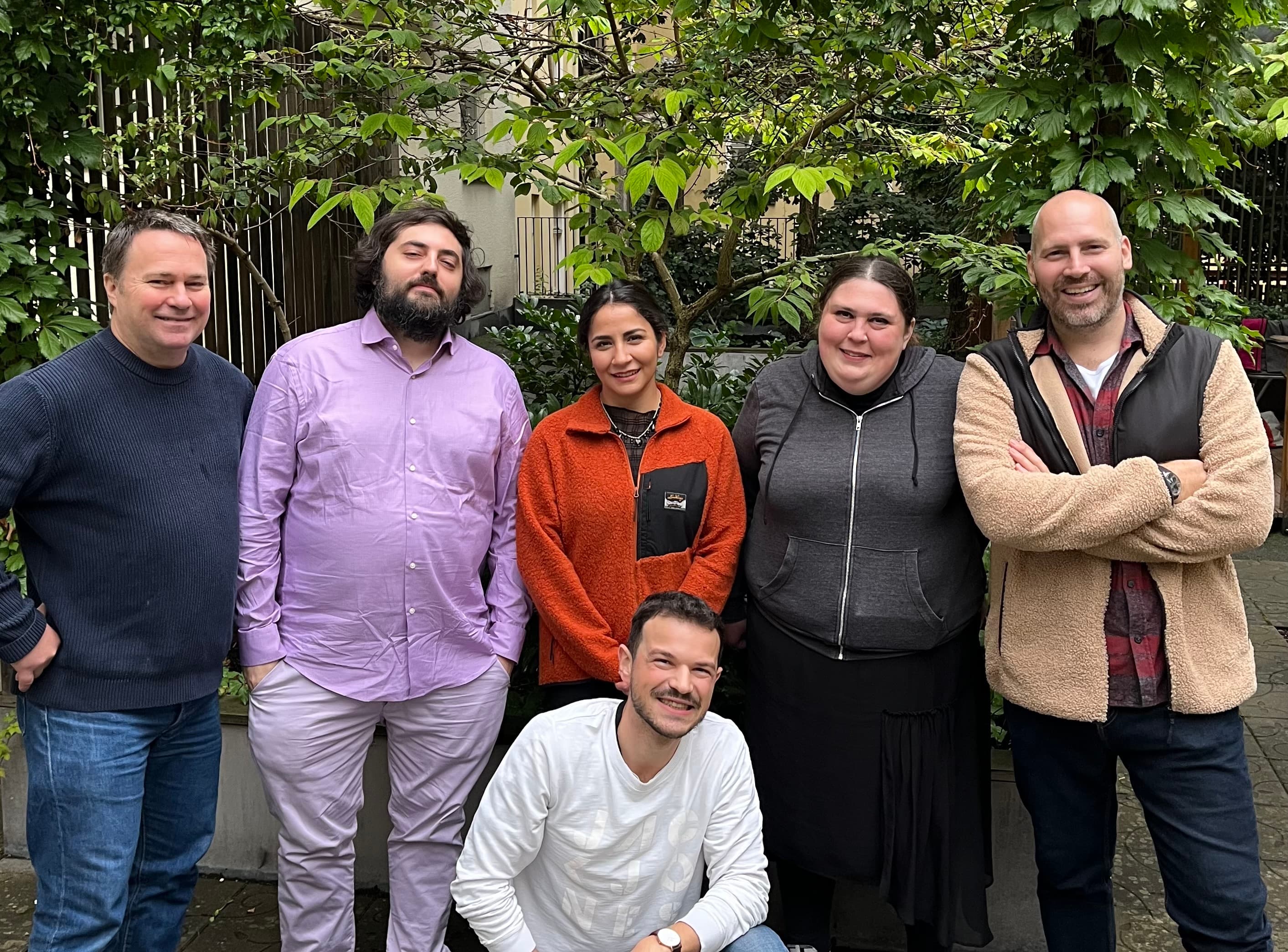
Inside a Cancer Lab: What We Do Not See as Patients
Three years ago, I was lying on a radiotherapy table in Hungary trying to stay calm while the machine circled around me. I remember the smell of the room, the sound of the machine, and the silence in my own head. Back then, I had no idea what was happening behind the scenes. I only knew the fear of the possible side effects.
Now, as a survivor, I have the privilege to step into another world, the world where treatments are born. I recently sat with researcher Jeroen Goos at Karolinska Institutet, a person who dedicates years of his life to moving science forward step by step. I felt deeply moved listening to him because I finally understood something important:
Behind every treatment, there is a human being. A team that dreams big. People who spend years doing slow, patient, careful work because they want someone like me to have a better future.
The First Spark
When I asked Jeroen where his passion came from, he smiled in a humble way and said it was not a romantic moment at all. It started during his studies when he was working on a project that asked students to design a molecule that could travel inside the body and find the tumour.
His specific task was to imagine how this tiny particle could reach the tumour cells without harming healthy cells. Their group won the project competition, and a professor pointed out the idea Jeroen had contributed. That was the moment he realised he wanted to spend his life working on this: Creating something that is injected into the body and finds the tumour like a guide before releasing treatment exactly where it is needed.
Explaining His Work in a Way We All Understand
I asked him to summarise his entire research in one sentence for a twelve-year-old. He thought for a second and said:
"We make tiny radioactive molecules that you can inject into the body. These balls travel through the blood, find tumour cells, and destroy only those cells."
That is when I felt the beauty of his work. These molecules behave like homing pigeons. They know where to go, and they know what to do. As someone who experienced the side effects of traditional radiotherapy, I found this approach almost idealistic in the best possible way.
A Day That Made Him Say "This Is Why I Do This"
There was a moment in his career that still gives him energy. Several years ago, his team created a small radioactive particle in the lab. They tested it in mice with tumours.
He explained that they tried three different doses:
- The small dose did not do much.
- The middle dose slowed the tumour down.
- The high dose either stopped it from growing or made it disappear.
When he told me this, his eyes lit up. These clear, simple, powerful results are rare in research. They are like small miracles. And they are the moments that keep researchers moving forward through years of uncertainty.
The Invisible Part: Time, Repetition, Failure
This is the side that patients never see. Jeroen said that most experiments do not go the way you hope. You try something. It does not work. You change one detail. You try again.
He laughed softly and said: "This is why research is called re-search. You search, you search again, and you keep searching."
So many people ask him the classic question "How is your research going? Have you found the solution?" And it is hard to answer, he said. Because from the outside, it looks like nothing happens.
- Inside the lab, every day is full of tiny progress steps that eventually build the foundation for something big.
- Science moves slowly, not because researchers are slow but because the process needs to be careful, safe, and patient.
- Only about five percent of ideas that reach clinical trials ever become real treatments.
So researchers must learn to celebrate the small wins. And every failure teaches something to the rest of the world. His words reminded me of something I learned in my own recovery: Patience is an act of courage.
Why Brain Cancer Is So Difficult
I asked him why brain cancer is so complicated to treat. He explained it in an understandable way:
"The brain has its own security guard. A barrier that protects it from anything harmful. The problem is that this guard does not only block dangerous things. It blocks many medicines as well."
So when you want to deliver a treatment to the brain you must first find a way to pass this guard without hurting anything. That makes the work slower and more frustrating but also more important.
How Long It Really Takes to Go from Idea to Treatment
He walked me through the journey in a way even I could follow:
- Design the molecule.
- Test it on cells in a dish.
- Then maybe even on little organoid models of human tissue.
- Then on animals.
- Then on larger animals sometimes.
- Finally, move to human trials stage by stage with strict safety checks.
It can take many years. And yet researchers continue. Because they know every small step carries hope for someone.
Why Clinical Trials Matter
This is where the bridge between the lab and real life exists. Without clinical trials, nothing ever reaches patients. Trials are not experiments thrown at people at random. They are careful, highly regulated steps with clear safety checks.
He told me that patients may fear the idea of experimental treatment. But everything that enters a trial has gone through a long road before reaching that stage. And sometimes these trials offer new possibilities when standard treatments no longer work. Sometimes they offer hope. And they always offer progress for the future.
A Message to Patients About Participating in Studies
Jeroen said something that touched me deeply. People may think, "it is too late for me," so why should I join a study?
His answer was quiet and honest:
"You cannot lose hope; believe that there is an opportunity for you to recover, despite your circumstances. Moreover, you have the opportunity to use the challenge life gave you to help the people who will face the same challenge in the future."
I felt a lump in my throat. There is something incredibly human about turning our pain into purpose. Knowing that the steps we take even in the hardest moments can help someone else stand a little stronger.
Closing Thoughts
As a survivor I often felt powerless during treatment. But now I understand something important. Behind every treatment there are humans who dream and try and fail and try again. People like Jeroen who dedicate their lives to creating better solutions for others.
And for patients joining studies is one of the ways to transform fear into hope. To give meaning to the pain we lived through.
At Oncoly our mission is to help people understand this world in simple human language. To help you see the people behind the science. To help you know your options and to support you at every step of the journey. If this research reaches patients one day I will be celebrating with Jeroen’s team. Because now I understand how it feels to be on the other side, while I know what it means to lie on that radiotherapy table as well.