When Care Continues Beyond the Appointment
There are moments in healthcare that never make it into medical records. Moments between appointments. Moments when the body feels unfamiliar. Moments when the question is not what treatment comes next, but how do I live in my body today?
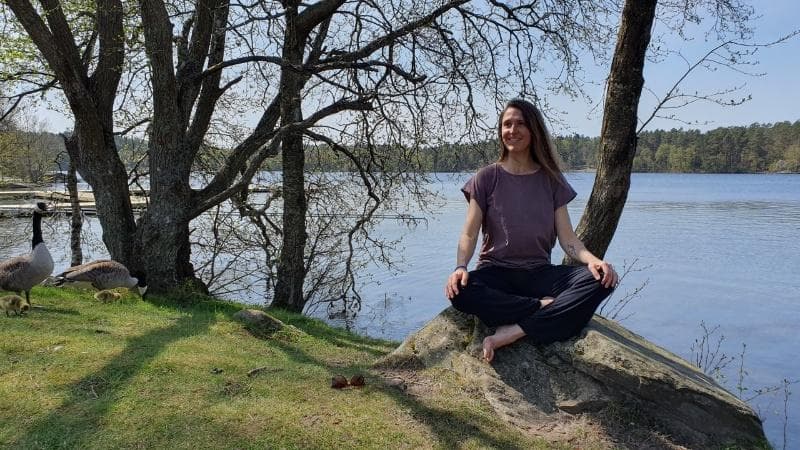
When Care Continues Beyond the Appointment
A conversation with Stéphanie Blockhuys, PhD - Cancer Scientist and Yoga teacher
There are moments in healthcare that never make it into medical records.
Moments between appointments.
Moments when the body feels unfamiliar.
Moments when the question is not what treatment comes next, but how do I live in my body today?
This is where our conversation with Stéphanie began, not as an expert explaining a method, but as a human reflecting on care, responsibility, and presence.
Yoga is not a replacement for medical treatment, and it was never intended to be
Today, yoga is no longer limited to private studios; it has become a supportive component in many healthcare environments, from primary care centers to rehabilitation clinics. adapted forms of yoga are increasingly offered as supportive care. As integrative oncology continues to emerge, adapted forms of yoga are increasingly being offered as part of supportive cancer care. Specialized approaches such as medical or oncology-adapted yoga are still being established, yet they are designed to meet the needs of people living with cancer. Despite this progress, one of the most persistent misconceptions Stéphanie encounters is the belief that yoga exists outside conventional medicine, rather than as an integrated practice that works alongside standard medical care.
In cancer care, yoga is not about choosing one path over another. Its purpose is to support the body´s innate healing capacity by strengthening the body, mind and spirit alongside conventional treatments such as radiotherapy, surgery and chemotherapy. The greatest benefit arises when medical care and complementary practices work together, each fulfilling its own role and responsibility.
This distinction is especially important today, when many patients are left to navigate, interpret, and apply online information on their own often without adequate guidance or context.
What yoga actually does
Stéphanie talks about yoga without mysticism or exaggeration. She presents it as an evidence-based, safe, and effective mind–body practice that helps patients reconnect with themselves and rebuild mental and physical resilience at a time when their bodies may feel fragmented. Through gentle movement, breath, and mindful awareness, yoga supports the restoration of physical and emotional steadiness during periods when inhabiting one’s own body can feel unfamiliar or challenging.
In practical terms, adapted yoga can support:
- lowering stress levels
- improving body awareness
- providing gentle movement when energy is limited
- regulating breathing and the nervous system
- reconnecting with a sense of self-agency
- strengthening both body and mind
Importantly, yoga in this context is not a rigid or universally standardized method. Although structured yoga programs for cancer care are beginning to emerge and are increasingly informed by research and clinical experience, they are designed as flexible frameworks rather than one-fits-all prescriptions. What remains essential is that each person listens to their own body first and moves in ways that feel appropriate and supportive for them.
Stéphanie emphasizes that especially during treatment, when needs shift from day to day, yoga must stay adapted, guided, and responsive to the individual and never forced.
Movement is not about performance
Listening to her, I was reminded of my own treatment period.
During that time, movement looked nothing like it had before. There was no training plan, no goals to reach. Some days, it was cycling. Other days, just a few push-ups. That was it.
Yet those moments helped me feel less sick during treatments.
Not because of intensity, but because movement gave me a sense of participation in my own body again. Stéphanie’s reflections echoed this truth: movement is not about achievement; it is about presence.
Even the smallest, gentlest movements can rebalance our mind-body system. When we are stressed, the mind is racing while the body feels depleted. Through mindful movements in yoga, we give our whole being a chance to recalibrate. We soften, reconnect and feel ’whole’ again, which can change how a day feels.
Why guidance matters
Another theme that kept returning in our conversation was responsibility.
Stéphanie is attentive to this. She speaks openly about the risk of patients trying techniques they find online without context, assessment, or support. A practice that may be helpful for one person can be inappropriate, or even harmful for another.
This is why education matters.
This is why expertise matters.
And this is why complementary care must remain aligned with medical guidance, not detached from it.
The goal is never to do more, but to do what is right for that individual, in that specific moment.
Caring without carrying
One of the most striking parts of our conversation was how Stéphanie spoke about working with patients at their most vulnerable.
She does not describe being emotionally depleted by it. On the contrary, she speaks about gratitude, grounding, and perspective. Supporting others does not drain her wellbeing; it deepens her commitment, because she finds meaning in helping people through difficult moments.
This kind of balance does not come from emotional distance, but from maturity, boundaries, and teamwork. From understanding that care is shared, not carried alone.
As a former patient, this was humbling to hear. Many caregivers and professionals quietly sacrifice large parts of their lives to help others heal. They want the best, always, even when outcomes are uncertain.
Remembering their humanity matters.
A broader picture of care
Science remains essential. Treatment remains essential. Evidence remains essential.
But healing does not happen only in the hospital.
It continues at home. In breath. In movement. In the way a person relates to their body, their fear and their hope. Complementary practices like adapted yoga do not promise outcomes, they offer support.
And sometimes, comprehensive support is what allows everything else to work better.
One thing worth remembering
If there is one thing Stéphanie hopes patients take with them, it is this:
Your body is unique.
Your path is your own - and Yoga can be a support along the way.
Stay present. Move gently. Breathe. Seek guidance. And remember that care can extend beyond the appointment, without ever stepping outside the foundation of science.